The cyclist sought help for an uncomfortable feeling in his chest, especially at rest. Stig remembered how the man walked up and down the stairs at home because he felt so unwell when he lay down. His ECG was unremarkable, and Stig heard nothing unusual through the stethoscope.
In his thesis, Stig describes the exercise test on the hospital bike. The workload rose by 50 watts every five minutes. The cyclist reached 450 watts and pedalled at that load for two minutes. Stig remembered the smell of scorched dust from the bike spreading through the ward.
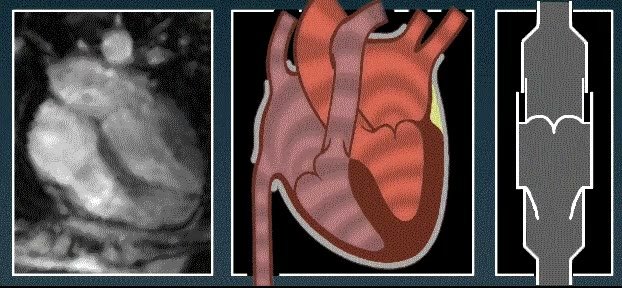
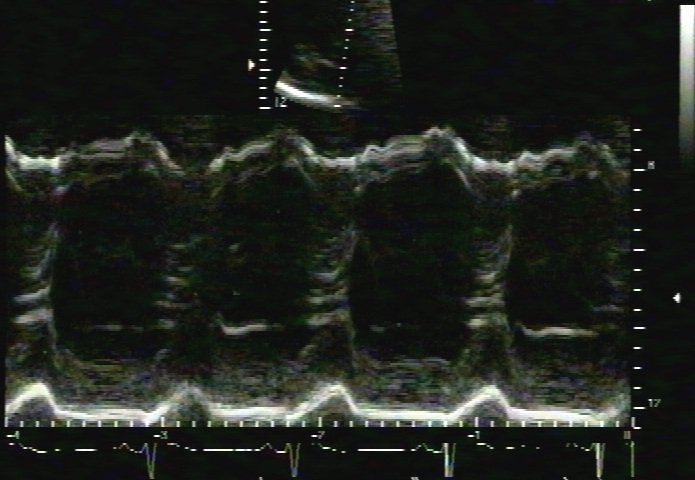
Stig recalled that the senior physician found it hard to believe someone who could cycle that well had a heart problem. Yet when the cyclist lay down, Stig saw on ultrasound that the wall between the ventricles swung unusually far back and forth. He suspected severe aortic regurgitation, a leak that lets blood flow back from the aorta into the left ventricle. Stig recalled that the cyclist went on to ride Vätternrundan, the Swedish long-distance cycling event, and described him as having won it.
The symptoms persisted. In the thesis, Stig writes that cardiac catheterisation revealed that two of the three aortic valve leaflets had ruptured completely. As the heart relaxed between beats, the pressure in the aorta and the left ventricle was almost the same. The cyclist received an artificial aortic valve, and his racing career ended.
Stig remembered a morning phone call from Karolinska. The team who had examined the cyclist wanted to know how he had been able to tell that the leak was so severe. Afterwards, his senior colleague encouraged him to pursue his thesis.
Why did the cyclist feel worse at rest when he could pedal so hard? In his pump model, Stig proposed that when inflow and heart rate were high, the blood’s momentum kept it moving forwards between beats. At rest, the longer interval between beats gave blood more time to leak back through the damaged valve. This was how he explained the difference between the exercise test and the cyclist’s symptoms at home.
Read the case in the thesis (PDF), section 11.11, pp. 101–102, patient 1.
From Stig’s recording Hjärta del 3 (Heart, part 3), 27 May 2017, approximately 1:11–4:53. Stig mentions the ride at 3:35. He recalls the examination and the phone call at approximately 4:09–4:53.